
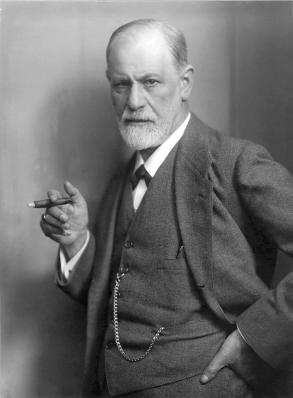
 I shall be concerned with the question of the unconscious in Freudian psychoanalysis. The theory of the unconscious continues to hold center stage in psychoanalysis. Understanding and explaining the workings, or more precisely the internal happenings of the unconscious is the preoccupation of nearly all of Freud’s writings. It seems that the concept of the unconscious is the pedestal, the foundation upon which all of Freud’s theories – repression, narcissism, melancholy and mourning, and so on – are built, for one cannot dispense with any of these while isolating the unconscious. In this brief reflection, I seek to offer a philosophical interpretation of Freud’s theory of the unconscious based on the following passages.1 My analysis seeks to bring out three main points: first, the correlation between repression and the unconscious; second, the various senses and views in which the unconscious can be interpreted and its topological relations to the preconscious and conscious; and lastly, the consistency of the systematic framework Ucs with the theory of repression.
Freud says explicitly that the unconscious is the home of repression, i.e., of repressed ideas, where they are stored. Since Freud does so, it is incumbent that our analysis first begins with his theory of repression. This will help make clear the latter theory, that is, the unconscious.
Freud writes: “the essence of repression lies simply in turning something away, and keeping it at a distance, from the conscious”2. Simply put: repression, for Freud, is a defense mechanism, a means whereby undesirable thoughts or ideas are put away, set aside or prevented from consciousness. It is a fending off of incompatible feelings, which instigate or spur on unpleasure, such as suffering, shame, self-reproach, self-disgust, and so on. As a defensive tool, repression is separating unpleasant ideas from conscious thinking. Repression is viewed in the Freudian sense as a withdrawal from painful stimuli, and any such experience, and it tries to reduce distress post psychological or psychical trauma. Thus, a repressed idea is one that has been isolated, pushed aside or even driven from consciousness or from “becoming conscious”. Freud tells us that when this happens, the repressed idea is then stored away in the unconscious, it becomes a part of the unconscious, because “everything that is repressed must remain unconscious”. Here, we see that Freud’s theory of repression is inextricably bound up with his theory of the unconscious. In fact, we could and can say that the unconscious develops out of repression, or put another way, the unconscious is the prototype of the repressed idea, feeling or thought; or that the unconscious is coextensive with repression. Since this correlation between the unconscious and repression or the repressed is established, we turn now to the unconscious proper.
By way of preliminary remarks, we must point that one may at first blush take Freud to be treating the unconscious as something actual, as something that truly exists, and to which we make physical references. Indeed, by Freud’s topological account, the unconscious assumes a structural or systemic character, which Freud calls Ucs. But this system or structure, we hold and Fraud would insist, is only epiphenomenal. The unconscious is a structure not in the spatial sense but in the temporal (or rather atemporal) sense. Thus, by this account, the unconscious is internal, since time or temporality is internal, or to put it in Kantian language, time being the form of inner sense, the unconscious can only be spoken of in terms of inner sense.* (We will turn to this shortly). Furthermore, because Freud calls the Ucs a phase while at the same time acknowledging it is a structure, therefore, the unconscious, unconscious processes and Ucs are all interchangeable, although subtle differences can be noticed.
From Freud’s essay Unconscious, we deduce that there are two ways in which we can understand unconscious thought, both of which correspond to one of the two views in which the unconscious is defined: the descriptive and the dynamic. In the first way, there are ordinary unconscious thoughts which appear not to be occupying one’s thinking or attention at any given moment or time. Freud makes this clear by investigating our beliefs. So, for example, I believe that Phelps Hall is located on Old Campus (Yale University), but as I’m thinking of other things, this belief is said to be unconscious. Now, as soon as I turn my attention to matters related to Phelps Hall – like, where the classics department is located, where I attend this class, and so forth – then my belief becomes relevant, and hence conscious. It follows that since we only think of or pay attention to one thing at a time, and hence since we have many other thoughts, it must be the case, Freud seems to be suggesting, that the bulk of our mental life is unconscious, or “mental unconscious” as he puts it. This is the very idea that Freud wishes to convey when he writes: “We can go further and argue, in support of there being an unconscious psychical state, that at any given moment consciousness includes only a small content, so that the greater part of what we call conscious knowledge must in any case be for very considerable periods of time in a state of latency, that is to say, of being psychically unconscious”3. Second, there are hidden thoughts – the things related to Phelps Hall that I just outlined – which we keep as secrets, which we continuously push to the back of our thought processes. But it is precisely this hidden thought that is associated with the “preconscious”. These two ways constitute the descriptive view of the unconscious, a view which leaves plenty room for the conscious, and one which almost makes it necessary for the difference and transition between the different phases.
With respect to this view, what is conscious or can be said to be conscious is only known for a moment. As one’s attention or awareness turns from one thing or event to another, it seems that what is conscious or what we are conscious of or what is our “object-cathexis” at any time is far smaller scope than everything else that one actually knows and is aware of, which lay in the unconscious. It follows that for Freud, becoming conscious, that is, the move from the unconscious (Ucs) to the conscious (Cs) is made possible by the psychical function of attention. Attention in this sense can be viewed as the preconscious (Pcs) phase, which we hinted at above, and this third phase, Pcs, seems to be just the unconscious in the descriptive sense. Thus, what we are currently unaware of can best be described as the unconscious. This is why Freud thinks the unconscious occupies most of mental life. Finally, as we mentioned at the end of the previous paragraph, the descriptive view forces a distinction between conscious and unconscious mental states by focusing on what is currently the object of attention. In a nutshell, the criterion for the descriptive view of the unconscious, of psychoanalysis in general, is simple awareness, a ‘this-ness’, ‘here-ness’ or ‘now-ness’.
Now, we must turn to the dynamic view of the unconscious. To be clear, Freud writes throughout that the dynamic view is the defining preoccupation of psychoanalytic theory. It is the dynamic unconscious that serves as a source of actual or potential motivation for mental conflict, or whereby mental content is actively prevented from becoming conscious as a result of some mental contradiction. In cognition, this unconsciousness makes no positive contribution, or if it does, the contribution is extremely minimal. On this account, the dynamic unconscious can be conceived clinically in terms of transference and resistance, although it manifests in dreams.
In conclusion, we must pose the following questions: Why does Freud theorize a dynamic unconscious? What purpose does it serve? We think that it is this dynamic sense of the unconscious that makes explicit the topological account, which divides mental processes into two (or three) systems or phases, and hence allows for repression to be coextensive with unconsciousness. Thus, the system Ucs and repression can be better explained on this account. The Ucs, Freud suggests, is a peculiar realm of the mental life decked with its own mechanisms, impulses and mode of expression. It is timeless in the sense that it does not make one single thing an object of attention at a given time, for as soon as this happens, then that object will be said to have entered the realm of consciousness (Cs). We know that whatever becomes conscious is no longer repressed, it is no longer part of the system Ucs. For something to be called repressed, or for it to be even capable of being repressed, it must be in the unconscious: “if, on testing, it is rejected by the censorship, it is not allowed to pass into the second phase; it is then said to be ‘repressed’ and must remain unconscious”. Lastly, to the extent that whatever is repressed lacks attention and therefore cannot be rationalized, the operations of the Ucs can be characterized as irrational and illogical.
Notes/References/Works Cited
1 Freud, Unconscious: “We have learnt from psycho-analysis that the essence of the process of repression lies, not in putting an end to, in annihilating, the idea which represents an instinct, but in preventing it from becoming conscious. When this happens we say of the idea that it is in a state of being ‘unconscious’, and we can produce good evidence to show that even when it is unconscious it can produce effects, even including some which finally reach consciousness. Everything that is repressed must remain unconscious; but let us state at the very outset that the repressed does not cover everything that is unconscious. The unconscious has the wider compass: the repressed is a part of the unconscious…”.
“In the first phase the psychical act is unconscious and belongs to the system Ucs.; if, on testing, it is rejected by the censorship, it is not allowed to pass into the second phase; it is then said to be ‘repressed’ and must remain unconscious. If, however, it passes this testing, it enters the second phase and thenceforth belongs to the second system, which we will call the system Cs…It is not yet conscious, but it is certainly capable of becoming conscious… In consideration of this capacity for becoming conscious we also call the system Cs. the ‘preconscious’ [Pcs]… By accepting the existence of these two (or three) psychical systems, psycho-analysis has departed a step further from the descriptive ‘psychology of consciousness’ and has raised new problems and acquired a new content. Up till now, it has differed from that psychology mainly by reason of its dynamic view of mental processes; now in addition it seems to take account of psychical topography as well, and to indicate in respect of any given mental act within what system or between what systems it takes place” (pp. 2997).
2 Freud, Repression, pp. 2978.
3 Freud, Unconscious, pp. 2992.
*Reference to Kant’s Critique of Pure Reason
 Abraham M. Keita